
Preserving the Bounty | Onions
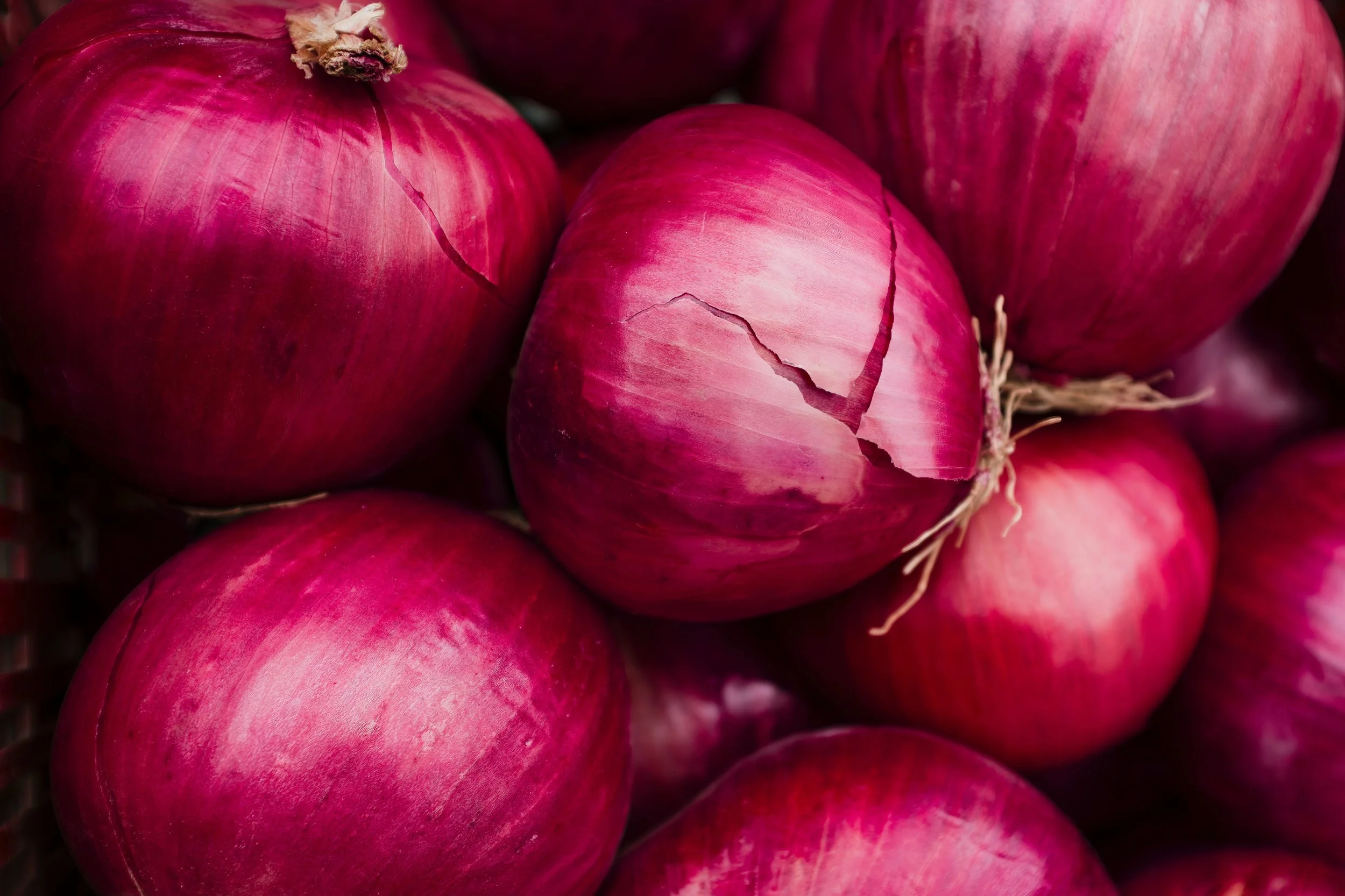
Onions are one of the most versatile crops in a Michigan kitchen. They're the foundation of soups, stews, sauces, roasts, and countless weeknight meals. While properly cured onions can last for months in storage, preserving onions in multiple ways can save time, reduce waste, and add convenience to your winter cooking.
Whether you've picked up a few extra pounds at the farmers market or stocked up directly from a local farm, here are five practical ways to preserve onions for the months ahead.
Let's start with the simplest preservation method: proper storage.
Many storage onion varieties can remain usable for several months when kept in the right conditions.
For best results:
Choose cured storage onions.
Store them in a cool, dark, dry location.
Use mesh bags, baskets, or crates with good airflow.
Check them monthly for signs of spoilage.
This method preserves both flavor and texture better than any other option and is ideal for onions you'll use regularly throughout the winter.
Best for: Yellow storage onions, red onions, and other long-keeping varieties.
2. Freeze Chopped Onions
Freezing is one of the easiest ways to preserve onions, especially if convenience is your goal.
Simply:
Peel the onions.
Chop or dice them.
Spread them on a baking sheet.
Freeze until solid.
Transfer to freezer-safe containers or bags.
By freezing the onions individually first, they won't clump together into one large block.
Frozen onions lose their crisp texture, but they work beautifully in:
Soups
Chili
Stir-fries
Casseroles
Slow cooker meals
Best for: Busy cooks who want onions ready to use at a moment's notice.
3. Make Caramelized Onions for the Freezer
If you've never frozen caramelized onions, you're missing one of the easiest ways to upgrade winter meals.
Start with several pounds of onions and slowly cook them until they become soft, golden, and sweet.
Once cooled:
Portion into small containers.
Freeze in meal-sized amounts.
Thaw as needed.
Add them to:
Pizza
Sandwiches
Grain bowls
Pasta dishes
Mashed potatoes
A few hours of cooking in the fall can save significant prep time throughout the winter.
Best for: Anyone who loves rich, deeply flavored meals.
4. Dehydrate Onion Slices
Dehydrating creates a shelf-stable pantry ingredient that takes up very little space.
Slice onions thinly and dry them using:
A food dehydrator
An oven on its lowest setting
An air fryer with a dehydration function
Once fully dried, store them in airtight containers.
Dried onions can be:
Rehydrated for recipes
Added directly to soups
Mixed into spice blends
Ground into homemade onion powder
Best for: Small kitchens and long-term pantry storage.
5. Pickle Them
Pickled onions are one of the easiest beginner preservation projects.
Quick pickled onions add bright flavor to:
Tacos
Burgers
Sandwiches
Grain bowls
Salads
A basic pickling solution typically includes:
Vinegar
Water
Salt
Sugar
From there, you can add herbs, garlic, peppercorns, or other seasonings.
The result is a colorful, flavorful condiment that can brighten up winter meals when fresh produce options become more limited.
Best for: Red onions and sweet onions.
Which Preservation Method Is Right for You?
If you have:
A cool basement: Store whole onions.
Limited storage space: Freeze or dehydrate.
A large harvest: Use a combination of methods.
A love for bold flavors: Try pickling and caramelizing.
The best preservation strategy is often a mix of techniques. Keep some onions in storage for daily cooking, freeze a few bags for convenience, and preserve a batch of pickled or caramelized onions for special meals.
A Pantry Built for Winter
One of the joys of eating seasonally is learning how to extend the harvest. Onions are among the easiest crops to preserve, making them a perfect starting point for anyone interested in reducing food waste and enjoying local food year-round.
A few extra pounds purchased during harvest season can provide months of flavor, convenience, and connection to local farms. That's the beauty of preserving the bounty: taking a crop at its peak and making it last well beyond the season.
Rooted & Stored Tip: If you're buying onions in bulk, preserve them using at least two methods. Store some whole for long-term freshness and freeze or dehydrate the rest for convenience. You'll get the best of both worlds all winter long.