
How to Store Onions All Winter
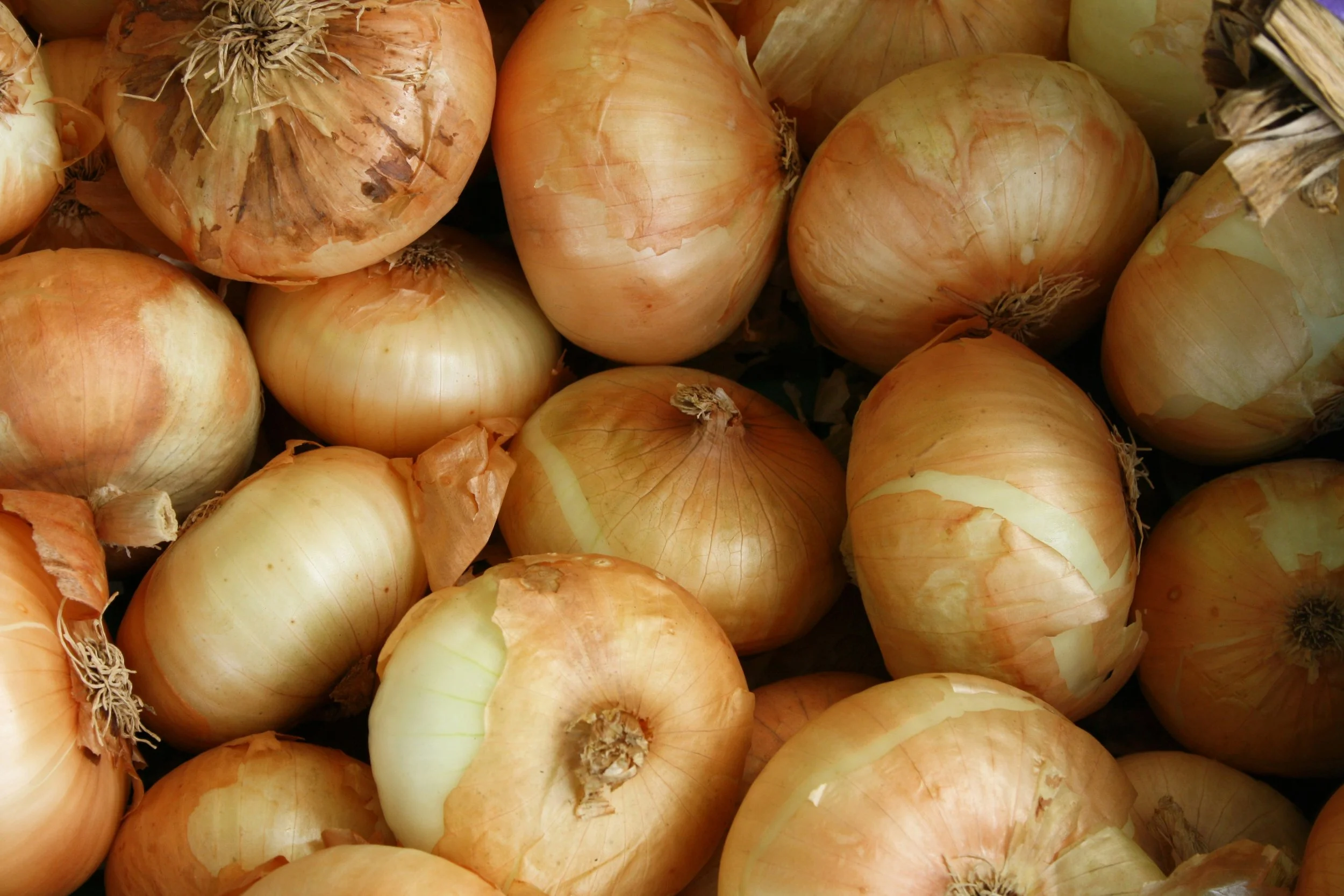
Few crops embody the "stored" side of local food quite like onions. Long after summer tomatoes have disappeared and fresh sweet corn is a distant memory, a well-stored onion can still bring Michigan-grown flavor to soups, stews, roasts, and weeknight dinners.
The good news? Onions are one of the easiest crops to store at home. With a little preparation and the right conditions, many storage onion varieties can last for months, carrying your fall harvest well into winter.
Not All Onions Are Created Equal
If your goal is long-term storage, start by choosing the right onions.
Storage onions typically have:
Dry, papery skins
Lower water content
Firmer flesh
A stronger flavor
Yellow onions generally store the longest, followed by many red varieties. Sweet onions are delicious but have a shorter shelf life because of their higher moisture content.
When shopping at a Southeast Michigan farm stand or farmers market, ask growers which varieties are best for storage. Most farmers are happy to tell you which onions are meant for winter keeping.
Buying Onions from a Local Farm? Ask These Questions First
One of the benefits of buying directly from a local farm or farmers market is that you can learn exactly how the onions were grown, harvested, and prepared for storage.
Before you buy a large quantity for winter use, ask the farmer:
Is this a storage onion or a sweet onion?
Has it already been cured?
How long do you expect this variety to store?
Should it be used first or saved for winter?
Many Southeast Michigan farms grow both fresh-use onions and storage onions. Sweet onions are wonderful for sandwiches and salads but tend to have a shorter shelf life because of their higher moisture content. Storage onions, especially yellow varieties, are bred to last for months when kept under the right conditions.
What to Look for at the Farm Stand
When choosing onions for winter storage, look for bulbs that are:
Firm and heavy for their size
Free from bruises or soft spots
Covered in dry, papery skins
Properly cured with dry necks and roots
Avoid onions that show:
Green shoots
Signs of mold
Damp outer layers
Cuts or damaged skins
A little extra care when selecting onions can mean the difference between a harvest that lasts until February and one that begins spoiling in a few weeks.
Consider Buying in Bulk
Fall is often the best time to purchase storage onions by the pound, half-bushel, or even larger quantities. Farmers are harvesting and curing their storage crops, and prices are typically at their most affordable.
If you have a cool basement, pantry, or storage area, buying onions in bulk can provide months of local food while reducing trips to the grocery store.
Let the Farmer Be Your Guide
Every growing season is different. Rainfall, temperature, and variety selection all affect how well onions will store.
The farmer who grew the crop is often your best source of information. Don't be afraid to ask:
"Which onions should I save for January?"
The answer may help you build a winter pantry that stays stocked with local flavor long after the harvest season ends.
The Secret Is Curing
Before onions can be stored, they need to be cured.
Curing simply means allowing the outer layers and necks of the onions to dry completely. This process seals moisture inside the bulb while protecting it from rot.
If you're growing your own onions:
Harvest when the tops naturally begin to fall over.
Brush off excess soil.
Lay onions in a warm, dry, well-ventilated area.
Allow them to cure for two to three weeks.
An onion is ready for storage when:
The outer skin feels dry and papery.
The neck is completely dry.
There are no soft spots.
Choose the Right Storage Spot
The ideal onion storage area is:
Cool
Dry
Dark
Well ventilated
A basement, cool pantry, mudroom, or unheated spare room often works well.
Avoid storing onions:
In direct sunlight
Near heat sources
In sealed plastic bags
In damp basements with poor airflow
The biggest enemies of stored onions are moisture and lack of ventilation.
Give Them Plenty of Air
One of the most common mistakes is storing onions in containers that trap moisture.
Instead, use:
Mesh bags
Wire baskets
Wooden crates
Paper bags with ventilation holes
Spread onions out whenever possible. Air circulation helps prevent mold and rot from spreading.
If one onion begins to spoil, remove it immediately before it affects the others.
Keep Potatoes and Onions Apart
Although many people store potatoes and onions together, they are actually better off separated.
Potatoes release moisture and gases as they age. Those conditions can cause onions to sprout or deteriorate more quickly.
For the longest storage life:
Store potatoes in one location.
Store onions in another.
Allow air to circulate around both crops.
Your winter pantry will thank you.
Check Your Onions Monthly
Stored onions are not a "set it and forget it" crop.
Once a month:
Remove any soft onions.
Check for mold.
Watch for sprouting.
Rearrange onions if needed to improve airflow.
A quick five-minute inspection can help the rest of your harvest last much longer.
When an Onion Has Gone Bad
Discard onions that are:
Soft or mushy
Moldy
Leaking liquid
Producing unpleasant odors
A firm onion with dry skin is still perfectly usable, even if it has been sitting in storage for months.
Building a Winter Pantry
Onions are one of the foundational crops of a Michigan winter pantry. Pair them with stored potatoes, squash, garlic, carrots, beets, and cabbage, and you'll have the building blocks for countless meals long after the growing season ends.
Local eating doesn't stop when the fields quiet down. In many ways, it simply moves from the field to the pantry.
The next time you're at a Southeast Michigan market, consider buying an extra bag of storage onions. A little planning in the fall can mean months of local flavor all winter long.
Rooted & Stored Tip: The best onions for winter storage are often the least flashy ones at the market. Those sturdy yellow storage onions may not get the attention of heirloom tomatoes or Honeycrisp apples, but they might be the hardest-working crop in your kitchen until spring.