
Preserve the Bounty | Eggplant
Why Eggplant Deserves a Spot in Your Winter Pantry
Eggplant is technically a berry (yes, really), which means it behaves differently than starchy winter squash or hardy roots. It doesn’t store whole for long periods — but it does freeze, roast, and transform beautifully into ready‑to‑use building blocks for cozy winter meals.
Think: January pasta nights, February curries, March sheet‑pan dinners when you’re craving something that tastes like sunshine.
Start With the Right Eggplant
Choose eggplants that are:
Firm and glossy — no soft spots or wrinkles
Heavy for their size — a sign of moisture and freshness
Bright green stems — not dried or brown
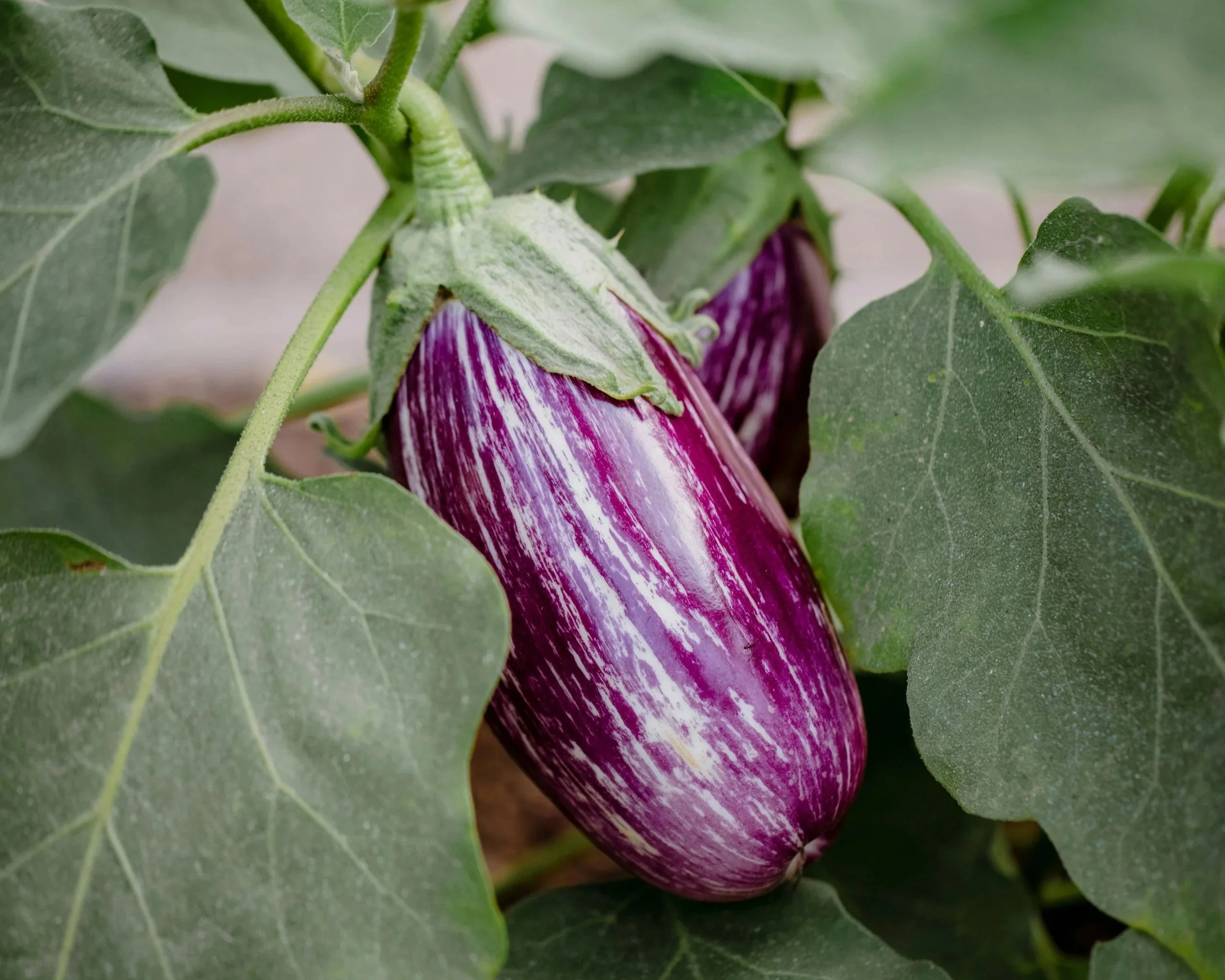
Local Southeast Michigan growers often offer varieties beyond the classic globe: slender Japanese eggplants, striped graffiti types, and tiny fairytale eggplants. All preserve well — you just adjust your prep based on size.
Prep: The Step Most People Skip
Eggplant browns fast and can turn mushy if you rush. Slow down just a bit:
Slice or cube evenly
Salt generously and let rest 20–30 minutes
Pat dry to remove excess moisture
This step keeps your preserved eggplant from turning watery later.
Method 1: Freezing (The Most Reliable)
Freezing locks in flavor and texture better than any other method.
How to Freeze Eggplant
Blanch slices for 3–4 minutes
Shock in ice water
Pat dry thoroughly
Lay flat on a baking sheet and freeze
Transfer to airtight bags or containers
Frozen eggplant is perfect for winter ratatouille, lasagna, curries, and roasted vegetable bowls.
Method 2: Roasted Eggplant Packs
If you want eggplant that’s basically ready to eat, roast it first.
How to Roast for Storage
Toss slices or cubes with olive oil, salt, and pepper
Roast at 425°F until caramelized
Cool completely
Freeze in meal‑sized portions
This method gives you deep, sweet, concentrated flavor — ideal for grain bowls, dips, and pasta sauces.
Method 3: Eggplant Purée (Your Winter Secret Weapon)
Roasted eggplant purée becomes:
Baba ganoush
Pasta sauce base
Soup thickener
Spread for sandwiches
How to Make It
Roast whole eggplants until collapsing
Scoop out the flesh
Blend with lemon, garlic, and olive oil
Freeze in small jars or silicone cubes
Purée freezes beautifully and thaws quickly.
Method 4: Dehydrating (For the Minimalists)
Dehydrated eggplant becomes:
Shelf‑stable
Lightweight
Perfect for stews and soups
Slice thin, dehydrate until crisp, and store in airtight jars. Rehydrate in warm water before cooking.
If You Want to Try Canning Eggplant (Read This First)
Eggplant is not a beginner‑friendly canning crop. Unlike tomatoes or peaches, it’s low‑acid and dense, which means it requires very specific, tested procedures to be safe. If you’re curious about canning eggplant, the best thing you can do is rely on science‑based, research‑backed recipes — not improvisation, not old family methods, and definitely not random internet advice.
Here are the most trusted places to find safe, tested canning guidance:
National Center for Home Food Preservation — The gold standard for research‑based food preservation. Their guidance explains why certain vegetables (like eggplant) require pressure canning or alternative methods.
Ball® Home Canning — Their books and website offer tested recipes and clear safety instructions. If eggplant appears in a Ball recipe, you can trust the process.
MSU Extension — Local, Michigan‑specific food safety guidance. Their educators often publish seasonal canning updates and host workshops.
If you decide to can eggplant, start small, follow a tested recipe exactly, and avoid any “creative” tweaks. With low‑acid vegetables, precision is safety.
How to Use Preserved Eggplant All Winter Long
Toss frozen cubes into chili or curry
Blend roasted eggplant into tomato sauce
Add pickled eggplant to grain bowls
Stir purée into soups for richness
Layer roasted slices into lasagna or moussaka
Eggplant becomes a quiet winter hero — adding body, flavor, and a reminder of August sunshine.