

Elderberries: A Little Michigan Berry Worth Knowing About
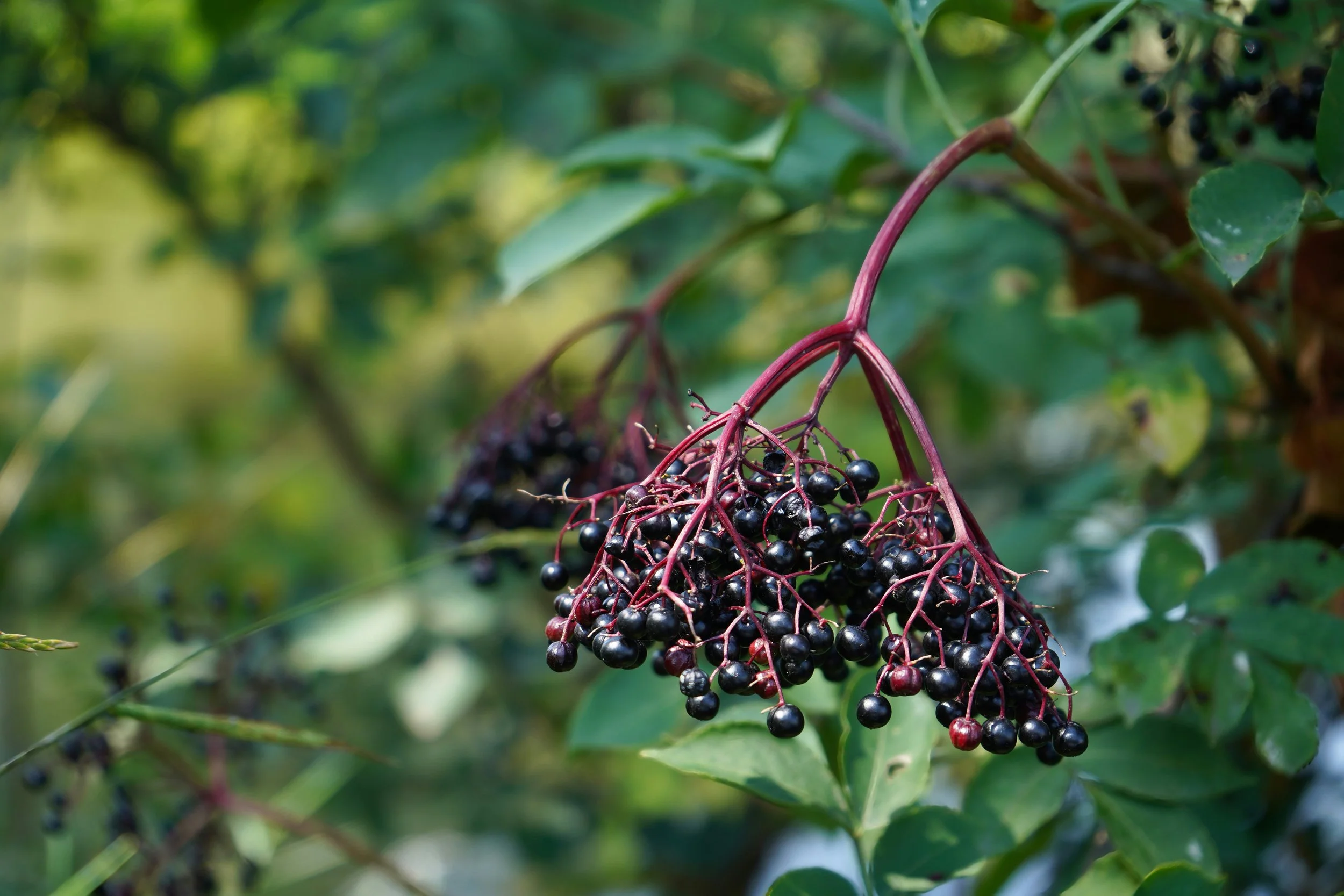
When fall rolls around in Michigan, apples and pumpkins get all the attention. But there's another local harvest worth talking about, especially as cold and flu season approaches.
Elderberries.
You've probably seen elderberry syrup at a farmers market or heard someone swear by it during the winter months. But what are elderberries, do they actually have benefits, and where can you find them locally?
What Are Elderberries?
Elderberries are small, dark-purple berries that grow in clusters on shrubs. American elderberries are native to Michigan, typically ripening in late summer and early fall.
They've been used for generations in traditional remedies, teas, syrups, jams, and preserves.
And unlike some trendy wellness ingredients, these little berries can grow right in our own backyards.
Are Elderberries Actually Good for You?
There's a reason elderberries have earned their reputation as a cold-weather favorite.
They're rich in anthocyanins, natural antioxidants that give the berries their deep-purple color.
Some preliminary research suggests elderberry preparations may help shorten or ease certain cold and flu symptoms. However, the evidence is limited, and elderberry hasn't been proven to prevent illness.
So, no, elderberry syrup isn't a magical shield against every bug going around.
But it's an interesting ingredient with nutritional value, a long history, and plenty of ways to enjoy it.
You can learn more about the research through the National Institutes of Health.
How Can You Use Elderberries?
Elderberries have a tart, earthy flavor that works beautifully with warming spices like cinnamon, ginger, and cloves.
A few ways to enjoy them:
Elderberry syrup: Stir into tea, sparkling water, or drizzle over pancakes.
Jams and jellies: A delicious way to preserve the harvest.
Fruit sauces: Pair with apples or other berries for desserts and breakfast dishes.
Herbal blends: Properly prepared elderberries work well with hibiscus, ginger, and other warming ingredients.
One important thing: Never eat elderberries raw. Raw or unripe berries, stems, and leaves contain compounds that can make you sick. Use properly cooked berries and trusted preparation methods. Homemade syrup should be refrigerated or frozen unless made using a scientifically tested preservation process.
Where to Find Elderberries Locally
You don't have to look far to connect with Southeast Michigan growers and makers working with elderberries.
Mrs. Allans Elderberry Boost — Visit this local Facebook page
Elderflower Farm | Goodrich — A Michigan farm dedicated to growing elderberries. A great place to learn more about locally grown berries and inquire about seasonal availability. Visit Elderflower Farm.
Elderberry Boost | Brighton — A Michigan business offering elderberry syrups and other elderberry-based products. Shop Elderberry Boost.
Fresh berries can be harder to find outside their late-summer harvest window, so check with growers about frozen berries, prepared products, and next season's availability.
The Rooted + Stored Takeaway
Elderberries are a good reminder that there's more growing in Michigan than what we typically see at the grocery store.
You don't have to grow your own or start making syrup from scratch.
Sometimes discovering a new local ingredient, learning how to use it, and finding a small producer doing something interesting is enough.
And that's exactly what connecting with our local food system is all about.