
Grass-Fed, Pasture-Raised, Organic & Local: What Do Farm Labels Actually Mean?
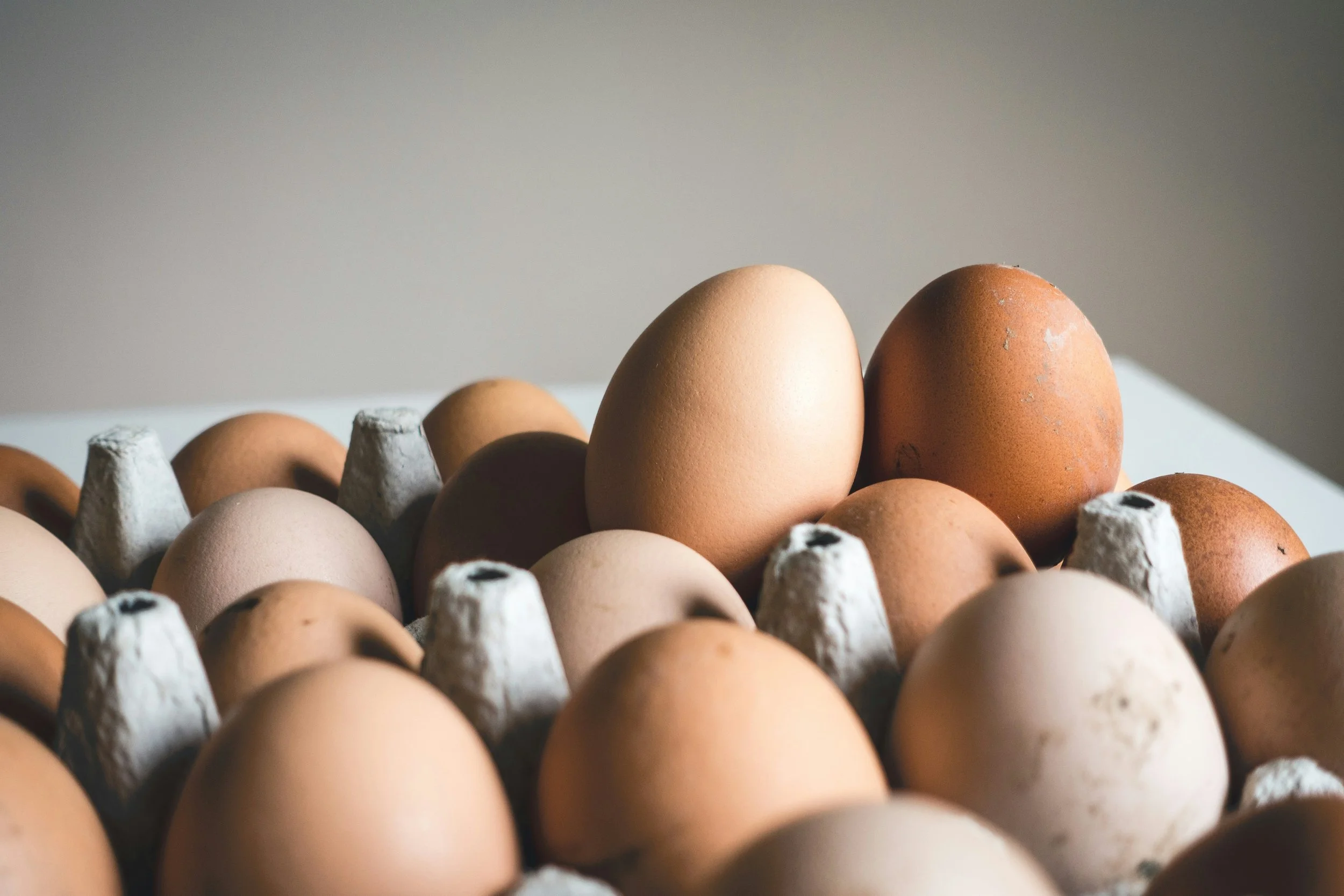
Buying food shouldn’t require decoding a secret agricultural language.
And yet here we are.
Grass-fed.
Grass-finished.
Pasture-raised.
Free-range.
Cage-free.
Organic.
Natural.
Non-GMO.
Local.
Regenerative.
Put enough of those words on a package and suddenly you're wondering whether you need a farming degree before buying eggs.
You don’t.
But understanding what these terms actually tell you — and what they don’t — can help you decide what matters when choosing food for your household.
Grass-Fed
Grass-fed refers to what a ruminant animal — usually cattle — eats.
Generally, grass-fed animals eat grass and other forage rather than grain.
One thing grass-fed doesn't automatically tell you is every other detail about how the animal was raised.
It doesn't necessarily answer questions about:
Antibiotic use
Farm size
Animal handling
Whether the farm is organic
How far the food traveled
That’s why asking the farmer can sometimes tell you much more than the label.
Grass-Finished
You may also see farms use the phrase grass-finished.
People commonly use this to emphasize that cattle stayed on a forage-based diet through the finishing stage instead of being switched to grain near the end of their lives.
If that distinction matters to you, ask.
Most farmers selling directly to customers are happy to explain their feeding practices.
Pasture-Raised
Pasture-raised generally describes animals that spend substantial time living on pasture.
You’ll commonly hear it used for:
Chickens
Eggs
Pork
Beef
But this is exactly where conversations with farmers become useful.
How much pasture? During which seasons? Are animals rotated?
What happens during a Michigan winter when everything is covered in snow?
Those answers tell you considerably more than two words on a carton.
Free-Range
Free-range generally indicates animals have access to the outdoors.
But “access to outdoors” and “spending the day wandering through green pasture” are not necessarily the same thing.
If outdoor access is important to you, ask how the animals are actually housed and managed.
Cage-Free Eggs
Cage-free refers to housing.
The hens aren't kept in cages and can move around within their housing environment.
It does not automatically mean they spend time outside.
That’s the big distinction between cage-free and pasture-focused systems.
USDA Organic
Organic has a much more specific meaning.
USDA Certified Organic products must follow federal standards governing how crops or livestock are produced and handled.
For crops, that includes restrictions on prohibited substances and requirements surrounding soil and production practices.
For livestock, organic standards include requirements involving feed and animal management.
Certification also involves documentation and inspection.
One important thing to remember:
A small farm can follow many practices you value without being Certified Organic.
Certification takes time, paperwork, and money, and some small farms choose not to pursue it.
That doesn’t automatically tell you whether their farming practices are better or worse.
Ask questions.
Natural
This is probably one of the most misunderstood food labels.
On meat and poultry, “natural” generally refers to processing — meaning the product is minimally processed and contains no artificial ingredients.
It does not automatically tell you how the animal lived or what it ate.
Natural does not necessarily mean:
Pasture-raised
Grass-fed
Organic
Local
It sounds broad. Its actual meaning is much narrower.
Non-GMO
Non-GMO generally refers to avoiding ingredients or feed produced using genetic engineering.
It is not the same thing as organic.
Organic standards prohibit genetic engineering, but a product can make a non-GMO claim without being organic.
And non-GMO doesn't tell you everything else about how a crop or animal was raised.
One label rarely tells the whole story.
Local
This one sounds simple.
It isn't.
There is no single universal distance that magically turns food into “local.”
For some people, local means within their county.
For others, it means Michigan.
For Field + Flock, what matters is strengthening connections between Southeast Michigan households and the farms and food producers around them.
The advantage of local food is that you often have something a national label can't provide:
Access to the person who produced it.
Regenerative
Regenerative agriculture is a growing term used to describe farming practices focused on things like soil health, biodiversity, water management, and improving the land over time.
But there isn't one single farming system practiced by every farmer who uses the term.
Different farms may focus on:
Cover crops
Rotational grazing
Reduced tillage
Compost
Crop diversity
Soil health
Integrating livestock
Instead of looking only for the word, ask what regenerative practices the farm actually uses. That’s where the meaningful information is.
What Should You Ask a Farmer?
You are allowed to ask questions.
You don't have to interrogate anyone next to the tomato table, but farmers selling directly to customers are often happy to explain how they grow or raise their food.
Try asking:
What do you feed your animals?
Are they raised on pasture?
Do you grow this here?
How do you manage pests?
Do you use antibiotics when animals are sick?
What happens with the animals during winter?
Which of your practices are most important to you?
You may find the answers matter more to you than any particular certification.
You Don’t Need the “Perfect” Label
There is a tendency in food conversations to turn every purchase into a moral decision.
Organic or conventional.
Grass-fed or grain-fed.
Pasture-raised or grocery store.
Local or not local.
Real life is more complicated.
Families have budgets.
Farms use different production methods.
Michigan has seasons.
And agriculture is not one-size-fits-all.
The goal isn't to find the farm with the longest list of labels.
The goal is to understand how your food was produced and decide what matters to your household.
Final Takeaway
Labels can be useful.
But they’re only one piece of the story.
One of the biggest advantages of buying directly from a farm is that you can go beyond the package.
You can ask who grew it.
How it was raised.
What the animals eat.
Why the farmer chooses a certain practice.
And suddenly your food isn't just a collection of claims printed on a label.
It's a conversation.
Use the Field + Flock directory to discover farms and food producers throughout Southeast Michigan — and don’t be afraid to ask them how your food is grown.