
A Friendly Guide to Fall Squash
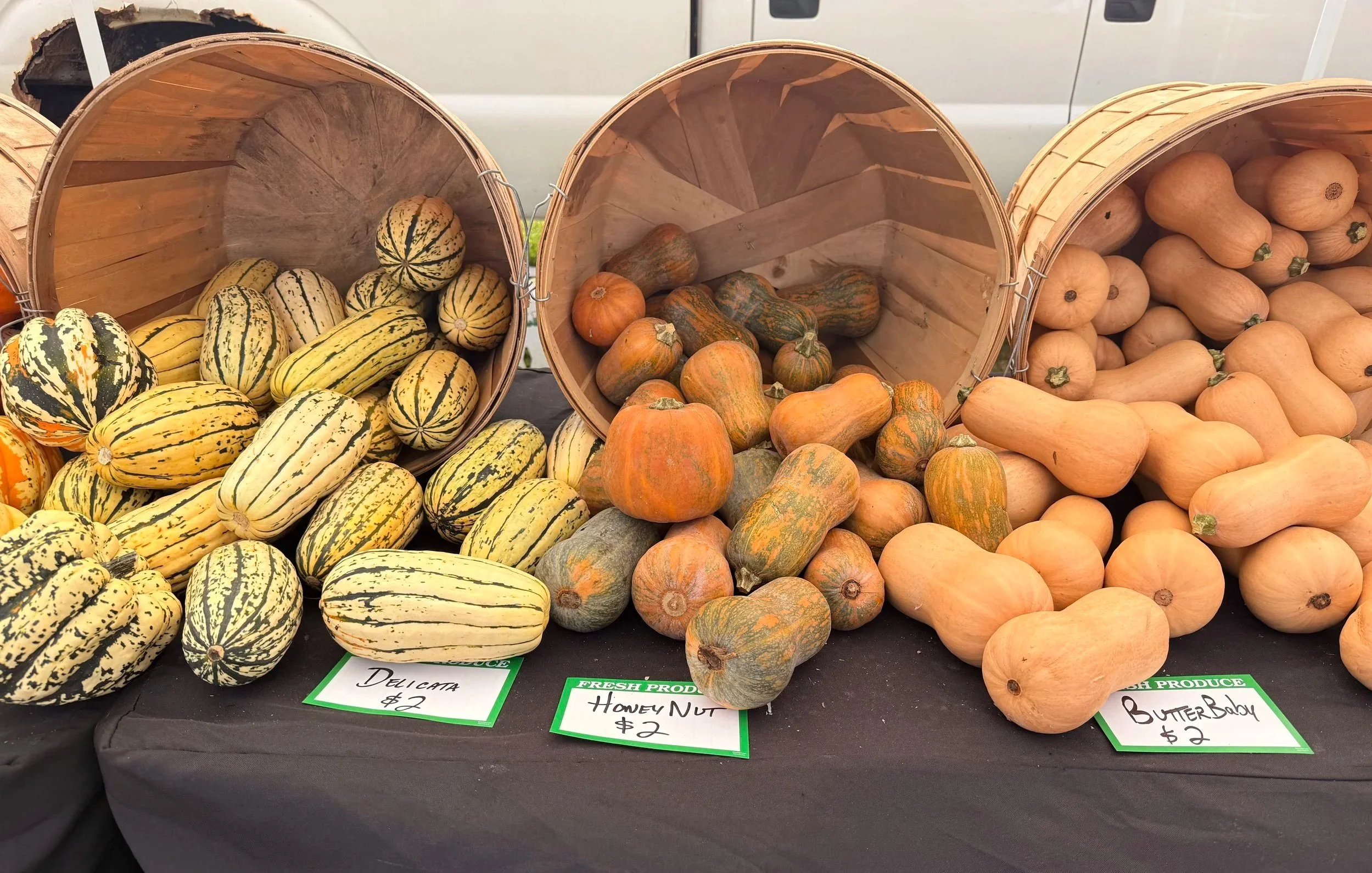
Fall squash season hits differently here in Southeast Michigan. One minute the farm stands are all tomatoes and sweet corn, and then—almost overnight—the tables fill with stripes, speckles, warts, and deep autumn colors. It’s the moment the season shifts, and you can feel it.
Fall squash isn’t just pretty. It’s practical, long‑keeping, and one of the easiest ways to stretch local food deep into winter. Here’s a Field + Flock guide to the varieties you’ll spot around our region and how to use them once you get them home.
Delicata
Delicata is the one you grab when you’re tired, hungry, and not in the mood for a project. Thin skin (no peeling), quick roasting time, and a naturally sweet flavor that caramelizes beautifully.
Best for: sheet‑pan dinners, salads, quick meals
Storage: 4–6 weeks
Carnival
Carnival squash looks like it dressed up for a fall festival—bright speckles of orange, yellow, and green. It’s a hybrid of sweet dumpling and acorn, which means it’s both pretty and genuinely delicious.
Best for: stuffing, roasting, fall table décor
Storage: 2–3 months
Sweet Dumpling
Small, sweet, and shaped like a little pumpkin that got invited to a tea party. Sweet dumpling squash is perfect for single‑serve meals and pairs well with maple, brown butter, or herbs.
Best for: individual roasted halves, soups
Storage: 3–4 months
Kabocha
Kabocha is cozy in squash form—dense, velvety, and almost potato‑like. It’s a staple in Japanese cooking and shines in curries, purees, and anything creamy.
Best for: curries, purees, tempura
Storage: 3–5 months
Red Kuri
Red kuri brings a chestnut‑like flavor and a bright orange teardrop shape that feels instantly autumnal. It blends into soups like a dream.
Best for: soups, mashes, risotto
Storage: 3–4 months
Buttercup
Buttercup has a little cap on top and a deeply creamy interior. It’s one of the richest winter squash varieties—almost custard‑like when roasted.
Best for: roasting, mashing, hearty stews
Storage: 3–6 months
Blue Hubbard
The big one. Blue Hubbard squash is knobby, slate‑blue, and often huge—10 to 20 pounds isn’t unusual. It’s fantastic for bulk cooking and preservation because one squash yields a mountain of puree.
Best for: big‑batch cooking, freezing, pies
Storage: Up to 6 months
Storing Fall Squash the Right Way
Most winter squash varieties are naturally long‑keeping, but a few simple habits make them last even longer:
Keep them dry
Store around 50–55°F (basements are perfect)
Don’t stack them—bruises shorten shelf life
Check monthly for soft spots
If you want to stretch your harvest into late winter, roast and freeze puree. Hubbard, kabocha, and red kuri freeze especially well.
Easy Ways to Use Fall Squash
Maple‑roasted delicata with chili flakes
Kabocha curry with coconut milk
Red kuri soup with ginger
Carnival squash stuffed with quinoa + herbs
Buttercup mash with brown butter
Hubbard puree for pies, breads, and baby food