

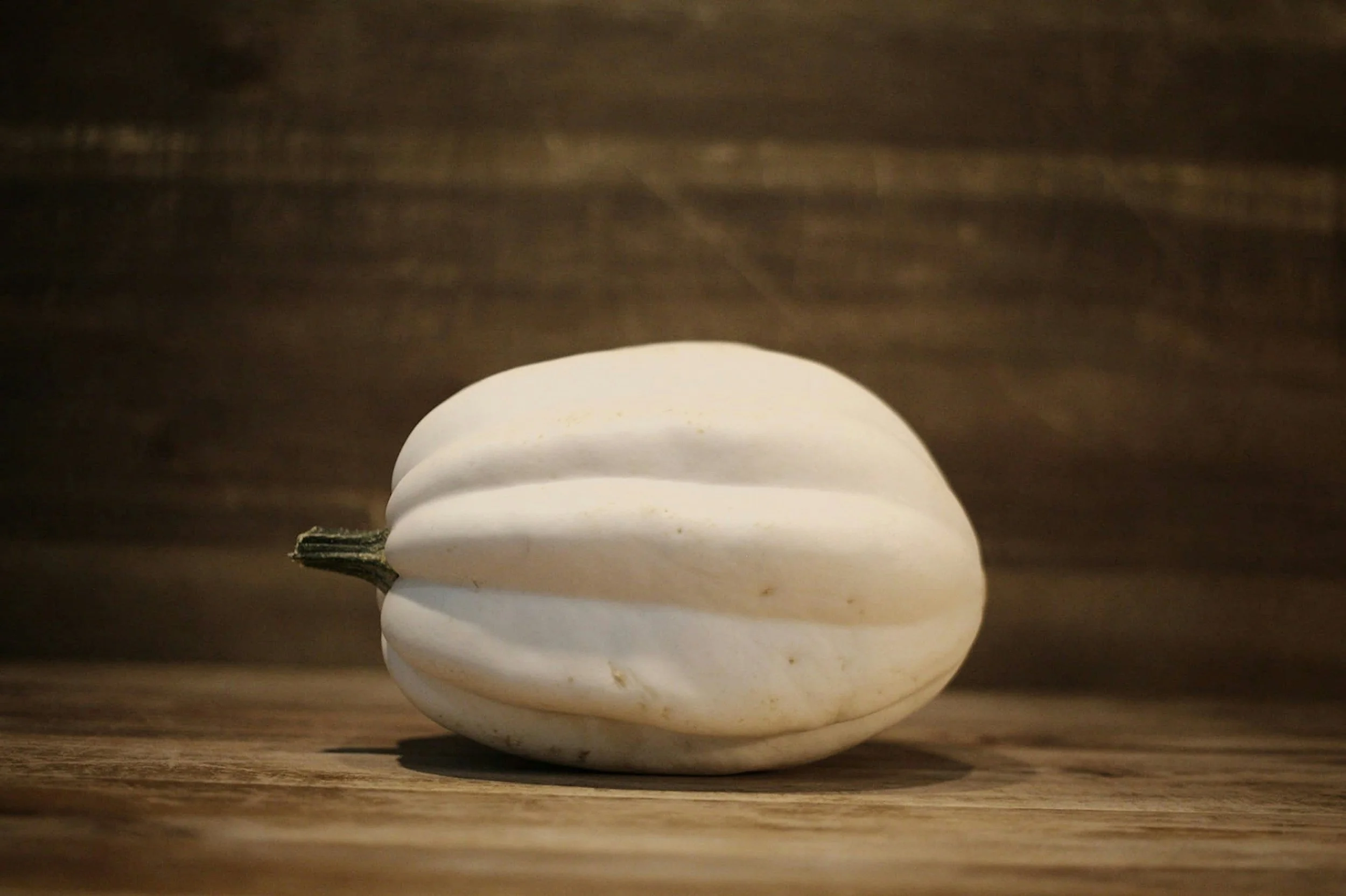
It looks like acorn squash, fluffs up a little like mashed potatoes, and might be the easiest new thing you add to dinner this fall.
I saw potato squash at a Michigan farm for the first time recently.
And with a name like that, I had questions.
Was it going to taste like a potato? Was it something you roasted? And how had I made it this far without knowing about it?
If you’ve spotted a little white squash at a farm stand and weren’t quite sure what to do with it, you’re probably not alone.
It turns out this one is pretty easy to get acquainted with. Especially if you have a little butter and garlic handy.
What Exactly Is Potato Squash?
The variety sold as Mashed Potatoes squash is a white acorn-type winter squash.
It has the familiar ridges and shape of acorn squash, but its skin and flesh are white. Once cooked, the inside becomes tender and can be fluffed or mashed, which helps explain the name.
The flavor is mild and gently sweet, making it a good match for savory seasonings like garlic, chives, black pepper and Parmesan.
It won’t be exactly like a bowl of mashed potatoes. It’s still squash, with its own flavor and texture.
But if you like the idea of a warm, buttery side dish that doesn’t require much fuss, you’re headed in the right direction.
A Little Michigan Squash Perspective
Michigan grows a lot more squash than you might guess.
According to USDA’s 2025 figures, Michigan growers produced 151.2 million pounds of squash on 7,200 harvested acres, with a reported crop value of about $42.5 million. That includes squash overall, rather than potato squash specifically.
We talk plenty about apples and cherries around here. Apparently, we should leave a little room for squash, too.
As for this particular variety, Gowan Seed lists Mashed Potatoes squash at around 1½ to 2 pounds each, taking roughly 90 days to mature from direct seeding.
Small enough to bring home one and give it a try. No bushel-sized commitment required.
What Do You Actually Do With Potato Squash?
Roasting is an easy place to begin. You can leave the skin on while it cooks, then scoop out the soft flesh afterward.
Here are a few ways to put it on the table.
Roast it and mash it.
Heat your oven to 400°F.
Wash and dry the squash, then carefully halve it lengthwise on a stable cutting board, cutting beside the hard stem rather than forcing your knife through it. Scoop out the seeds and stringy center with a spoon.
Rub the cut surfaces with olive oil, sprinkle with salt and pepper, and place the halves cut-side down on a baking sheet.
Roast for about 40–50 minutes, until the flesh is easily pierced with a fork. Larger squash may need a little longer. This method comes from Michigan grower Little Pistol Farms.
Let it cool enough to handle, scoop the flesh into a bowl, and mash with a little butter or olive oil.
Taste, adjust the salt and pepper, and you have a side dish.
Give it the garlic-and-herb treatment.
Once you’ve roasted and mashed it, stir in some roasted garlic and chopped chives.
A little Parmesan works nicely here, too. If you’d like a softer mash, add milk or cream a splash at a time.
Serve it alongside roast chicken, pork chops or mushrooms. Something familiar next to something new makes dinner feel pretty manageable.
Serve it right in the shell.
You can also leave the cooked flesh in each half and gently fluff it with a fork.
Add butter, salt, pepper and your favorite herbs, then serve it just like that.
It looks lovely on a plate, and there’s one less bowl to wash. Both count.
Bring it to the holiday table.
If you’re looking for another vegetable to sit beside the turkey, this is an easy one to consider.
Try the roasted mash with browned butter and sage, or keep it simple with butter and black pepper.
Give it a test run with a regular dinner first. Thanksgiving morning is busy enough without getting acquainted with a new squash.
How to Choose and Store It
Look for a squash that feels firm, without soft spots or damaged skin.
Keep the whole squash in a cool, dry place with good airflow until you’re ready to cook.
Acorn squash generally has a shorter storage window than some other winter squash. University of Minnesota Extension lists about one month at around 50°F under recommended conditions. A warm kitchen counter won’t provide those same conditions.
So enjoy how pretty it looks when you bring it home, but go ahead and put it on the dinner plan.
If you’re buying several kinds, ask the grower which one to use first. That’s a useful question whether you’re new to squash or have been cooking it for years.
Where to Look Around Southeast Michigan
A few farms in the Field + Flock directory have advertised seasonal squash:
Tipper Farms, China Township: Has advertised a wide variety of squash, pumpkins and gourds in its fall offerings at 6705 Lindsey Road.
Montrose Orchards, Montrose: Lists squash among its in-season offerings at 12473 Seymour Road in Genesee County.
Jacob’s Fresh Farm, Dexter: Grows winter squash as part of its fall harvest and offers it through seasonal CSA shares. Its farm stand is at 475 N Fletcher Road in Washtenaw County. Ask which squash varieties are available at the stand before heading over.
Mashed Potatoes squash specifically hasn’t been confirmed at these farms. Ask for it by name, and check current hours and selection before making the drive.
If they don’t have it, ask which squash they recommend for roasting or mashing. A farmer’s favorite might become yours.
Give One a Spot at Dinner
You don’t need to overhaul your grocery list to try something new.
One squash, a little olive oil, and whatever you were already planning for dinner is a perfectly good start.
Maybe you’ll love it mashed with garlic. Maybe you’ll prefer it fluffed right in the shell. Either way, the next time you see that little white squash at a farm stand, you’ll know what to do with it.
And that’s one more Michigan-grown thing that feels a little more at home in your kitchen.
Browse Field + Flock to explore more Southeast Michigan farms, markets and seasonal food producers.