

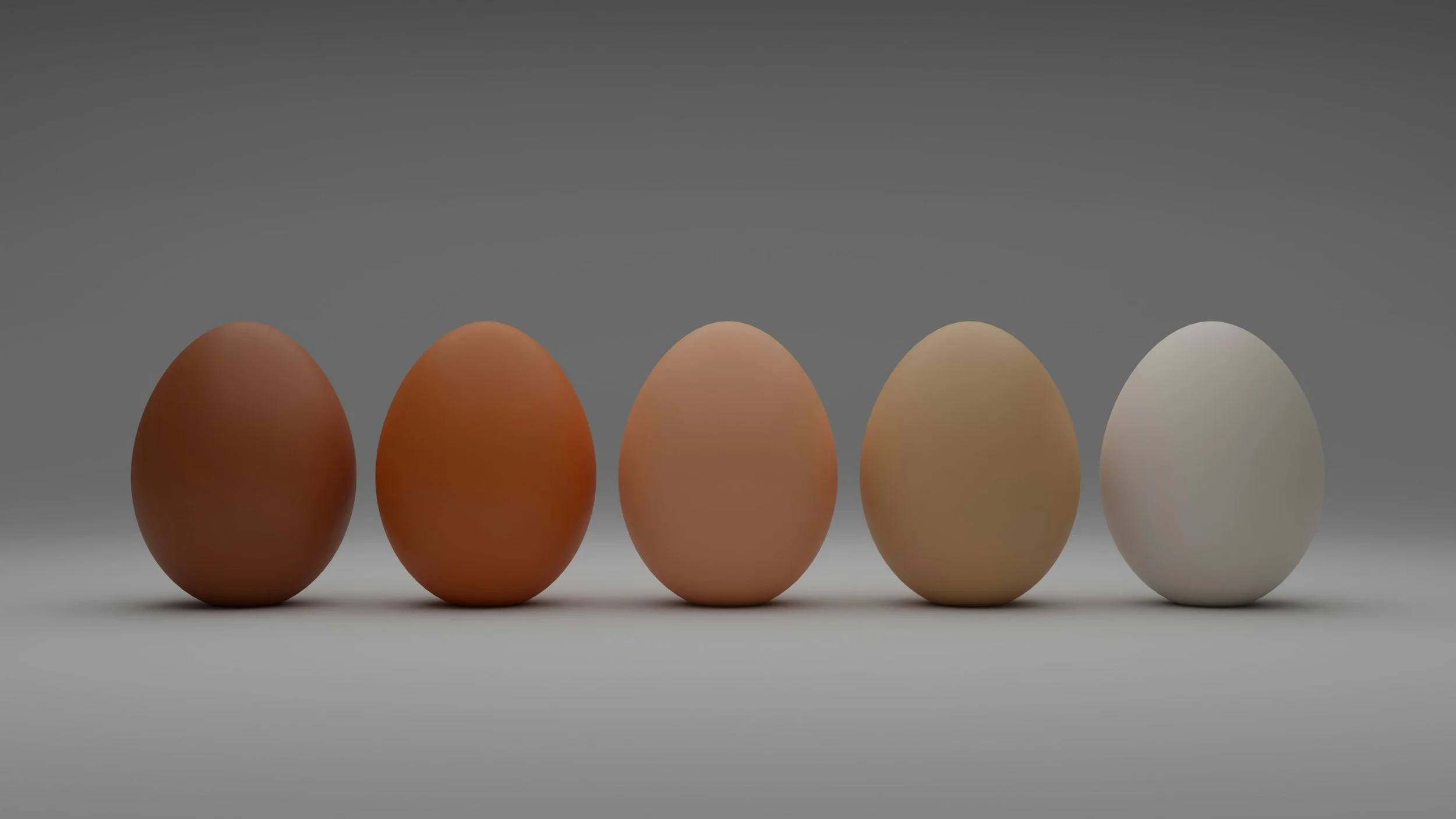
There's something about opening a carton of farm-fresh eggs and finding a mix of soft blues, warm browns, creamy whites, and the occasional green. It feels a little like opening a treasure box, especially if you're used to the perfectly matched cartons at the grocery store.
But besides being pretty, do all those colors actually mean anything?
Are brown eggs healthier? Do blue eggs taste different? And why do some farmers have a whole rainbow while others only have one color?
As it turns out, the explanation is pretty simple, and it starts with the chickens themselves.
It's All About the Chicken
Just like different breeds of dogs have different coat colors, different breeds of chickens produce different eggshell colors.
White Leghorns are known for white eggs. Rhode Island Reds commonly lay brown eggs. Ameraucanas are famous for their blue eggs, while Easter Eggers can produce a variety of shades, including blue and green.
The color comes from pigments deposited during the egg's formation. Some eggs are naturally white, some receive brown pigment, and others have blue coloring incorporated into the shell.
A green egg is often the result of blue shell coloring combined with brown pigment.
And while a hen will generally continue laying eggs within her breed's color range, the exact shade can change a little over time.
So that colorful carton isn't necessarily a sign of anything unusual. It may simply mean the farmer keeps a variety of chicken breeds.
Are Brown or Blue Eggs Healthier?
This is probably the biggest misconception about egg color.
Despite their reputation, brown eggs aren't automatically healthier than white eggs. Neither are blue or green eggs.
According to Michigan State University Extension, eggshell color doesn't determine the nutritional value or flavor of an egg.
What can influence an egg's nutritional makeup is the hen's diet.
For example, farmers can use specific feed formulations to increase certain nutrients, including omega-3 fatty acids. But those differences aren't something you can identify by looking at the shell.
In other words, you don't need to pay more for a brown egg simply because it's brown.
What About Those Beautiful Orange Yolks?
If you've ever cracked open an egg from a local farm and found a deep golden-orange yolk, you probably noticed the difference immediately.
Yolk color is influenced largely by what the hen eats.
Ingredients containing natural pigments called carotenoids can produce deeper-colored yolks. Those pigments may come from plants the chicken forages or ingredients in its prepared feed.
But a darker yolk isn't a guaranteed sign that the egg is fresher, more nutritious, or from a pasture-raised chicken.
It's one clue about the hen's diet, not a complete picture of how she was raised.
And there's another detail worth knowing: eggs don't necessarily taste different because their yolks are different colors. Feed, freshness, preparation, and individual preferences can all influence the eating experience.
So What Should You Actually Look for When Buying Eggs?
Instead of choosing eggs based on shell color, ask a few questions that tell you more about the eggs themselves.
How recently were they collected? A local egg seller may be able to tell you when the eggs were gathered, giving you more information than shell color ever could.
What do the chickens eat? Some farmers rely primarily on complete poultry feed, while others also provide opportunities for the flock to forage.
How are the eggs handled and stored? Proper handling matters whether the eggs come from a backyard flock or a large commercial operation. Keep purchased eggs refrigerated at 40°F or below, and use them within about three weeks for best quality.
How are the hens raised? If things like outdoor access or pasture management matter to you, ask the farmer directly. Eggshell color can't answer those questions.
One of the nicest parts of buying directly from a local egg producer is being able to have that conversation.
A Colorful Carton Has a Story Behind It
The next time you see a carton filled with blue, brown, and green eggs, you'll know you're probably looking at the work of several different chicken breeds.
They're beautiful, absolutely. But the real value of knowing where your eggs come from is understanding the farm, the flock, and the care behind them.
And that's something you can't judge by the shell.
Looking for locally raised eggs? Explore the Field + Flock Farm Directory to connect with farms and egg producers across Southeast Michigan.
Find your roots here.